
Case Study / AI and RAG

Turning Hatchery's own knowledge into a governed AI and RAG operating layer.

Hatchery needed its public site and product knowledge to do more than describe the company. Built on Mentis, Axis, and Hatchery's product layers, the platform lets teams with defined roles and security access manage content, AI knowledge sources, rules, and retrieval-backed answers from one governed system.

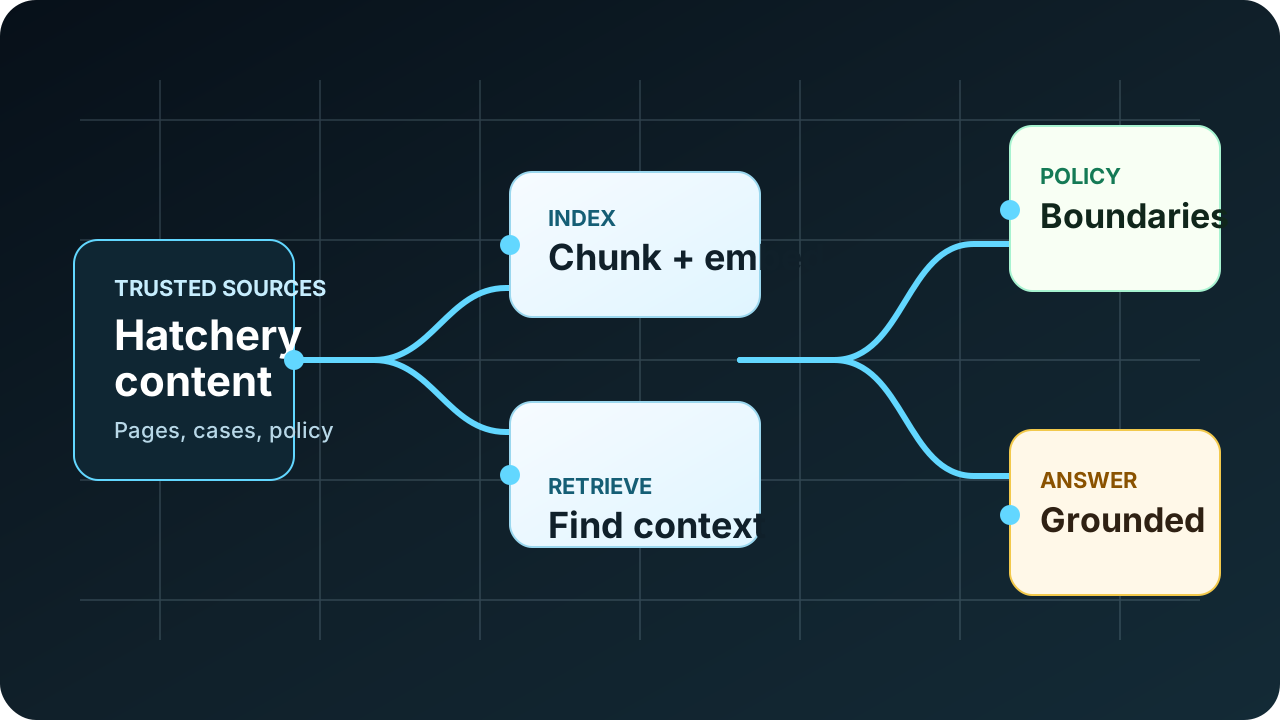
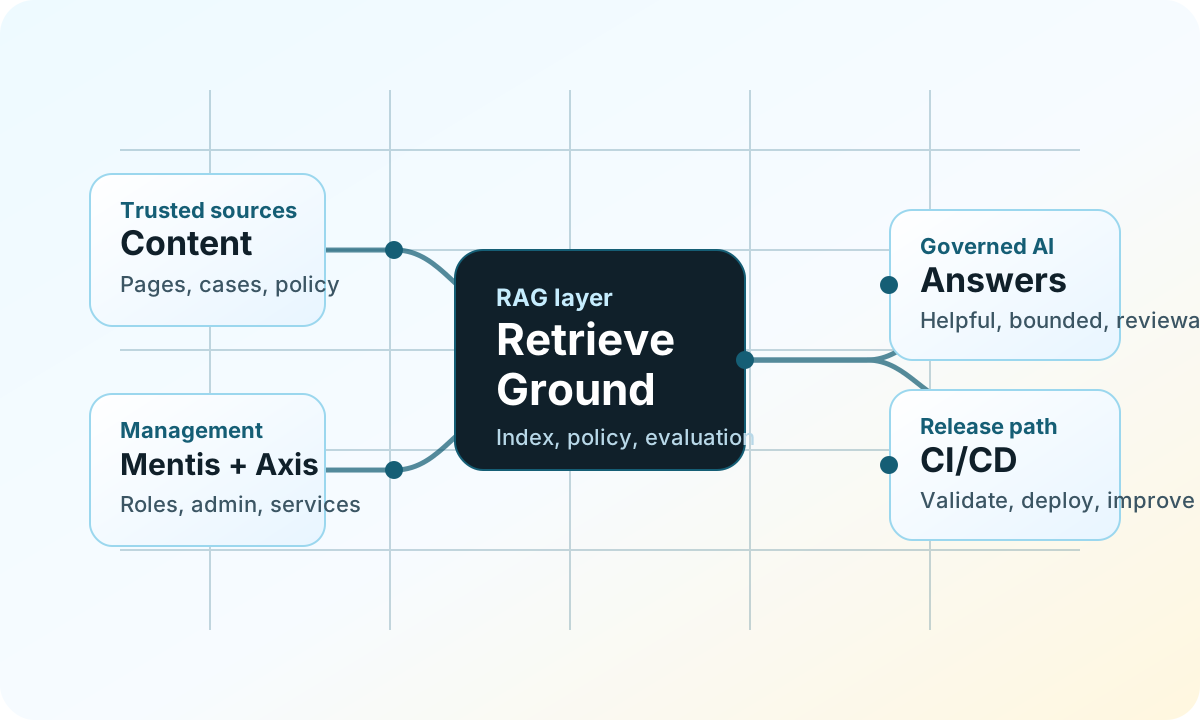
Hatchery AI and RAG case-study illustration showing managed knowledge, retrieval, policy checks, Mentis services, and governed AI answers.
RAG Source-backed answers The AI layer can work from indexed Hatchery content instead of unsupported general claims.
Mentis + Axis Application foundation Mentis services and Axis-managed interfaces give teams a controlled place to operate the system.
Roles Managed content access Teams can manage pages, case studies, policies, RAG sources, rules, and support content through controlled access.
CI/CD Release discipline AI-facing content and code still move through validation, review, deployment, and served-page checks.
At a glance

Hatchery AI/RAG Platform

Hatchery's team uses its own Mentis and Axis foundation as a proof system for practical AI and RAG.
Teams with roles and security access can manage pages, case studies, policies, RAG sources, prompt rules, support copy, and product language.
Managed content becomes trusted retrieval material for AI-assisted answers instead of scattered documents or one-off prompts.
The goal is useful AI with ownership, permissions, review, and release controls, not an unmanaged chatbot bolted onto the site.
Problem

AI needed to understand Hatchery without inventing Hatchery.

A general model can answer broad software questions, but it does not know Hatchery's current products, positioning, policies, case studies, or delivery standards unless that knowledge is controlled and refreshed. Hatchery needed a Mentis and Axis-backed way for real teams to manage the content, rules, and retrieval sources AI depends on.

Risk

Public AI creates trust, security, and brand risk when it is not grounded.

A wrong answer on a product site can misstate services, promise work Hatchery should not promise, expose the wrong intake path, or create a legal or security misunderstanding. RAG reduces that risk only when sources, permissions, roles, refresh logic, evaluation, and human ownership are part of the system.

Hatchery role

Hatchery treated RAG as managed product infrastructure.

The platform connects site content, managed case studies, product pages, legal language, AI-specific policies, prompt rules, and support content into a source-backed knowledge layer. Mentis provides the service foundation, Axis provides the managed interface patterns, and role-based access lets teams own the content safely as the product and company change.

See it work

The team manages the truth. The chatbot makes it useful.

Axis gives the right people a controlled place to manage content and prompt starters. Mentis turns that approved material into a retrievable knowledge layer, so the public assistant can answer unusually specific questions with relevant sources instead of generic model memory.

Axis management Roles + permissions

Content teams shape the answer

Every change has an owner, an access boundary, and a path into the knowledge index.

Case studies Proof, outcomes, media, and customer context Published
Products and capabilities Mentis, Axis, Aegis, services, and delivery language Managed
Policies and rules AI boundaries, legal language, and approved claims Controlled
Prompt catalog Audience-aware questions shared across applications Reusable
Marketing Product Legal Engineering
Mentis services RAG

Retrieve the right material, apply access and policy boundaries, then ground the answer.

Retrieve Ground Cite
Grounded site assistant Live

Ask Hatchery

The best demonstration is a question that a generic chatbot could not answer specifically. Pick one to ask the live system.

Grounds from MilTech case study ScienceMedia case study Aegis
Grounds from Work paths Delivery Product family
Grounds from FanUp rescue Work paths Capabilities
Grounds from AI systems Aegis AI/RAG case study

The prompt catalog is structured content, so Mentis-backed products and future applications can reuse the same questions, audiences, source hints, and access rules.

Comparison

Generic AI widget vs. governed Hatchery RAG

Need Generic AI widget Hatchery AI/RAG platform
Answers Relies on general model knowledge and prompt wording. Uses indexed Hatchery content, product pages, policies, and case-study source material.
Knowledge updates Changes require manual prompt edits or ad hoc retraining assumptions. Teams can manage content, routes, policies, rules, and language as controlled product data that can be refreshed into retrieval.
Team access Everyone depends on a developer or one admin account to change AI-facing content. Roles and security access let the right people manage the right content areas without opening everything to everyone.
Governance Rules live in the prompt and are hard to inspect. AI boundaries, acceptable use language, privacy text, and product claims stay visible and reviewable.
Sensitive intake Visitors may assume the chatbot is a secure channel. The site separates public AI help from private project terms, confidential material, and secure customer systems.
Operations The chatbot is separate from deployment discipline. RAG, pages, admin tools, CI/CD, validation, and served-route checks are part of the same operating model.
Quality Output quality is judged informally after launch. The system is designed for source review, answer evaluation, policy updates, and continued improvement.
What Hatchery built

Built as one product system.

Strategy, design, code, integrations, infrastructure, and operations move together so the product can launch and keep serving customers.

Mentis and Axis foundation

Mentis provides the Java service layer, security habits, data patterns, and reusable product foundation. Axis gives the managed interface patterns teams need to administer content, workflows, and AI-facing rules.

Source-backed RAG foundation

Public Hatchery content, case studies, product language, policy pages, and support copy can become trusted retrieval material for AI-assisted answers.

Role-based content management

Teams can manage pages, case studies, policies, RAG sources, prompt rules, routes, support language, and product copy through controlled roles and security access.

AI governance and intake boundaries

The public experience explains that the chatbot is helpful but not a secure intake path for confidential, regulated, legal, financial, or security-critical material.

Management layer for knowledge and routes

Admin-managed content, route configuration, case-study data, and product language give Hatchery a practical way to keep AI sources aligned with the actual site.

Release and validation discipline

RAG-facing content and code changes still follow the habits serious software needs: source control, JSON validation, served-page checks, route review, and CI/CD thinking.

Decisions

Product choices that made the work hold together.

01

Ground the AI before making it more autonomous

The first value is trusted context. Agents and tool use only make sense after sources, policies, identity, logging, and review paths are controlled.

02

Separate product truth from delivery mechanics

Hatchery's products, policies, claims, case studies, and AI rules should be managed as canonical content, while RAG, routing, indexing, and deployment are delivery layers around that truth.

03

Let teams own content through roles

The system should not depend on one developer editing every AI-facing detail. Different people need safe access to the content, rules, and project knowledge they are responsible for.

04

Make limits part of the product

The platform does not pretend RAG makes AI perfect. It makes answers more grounded, easier to inspect, and safer to improve over time.

Hatchery AI/RAG today

Hatchery's site now demonstrates the same AI position it recommends to customers: start with a Mentis and Axis foundation, give teams role-based ways to manage content and rules, add retrieval, define boundaries, validate releases, and keep Hatchery's team responsible for judgment. The result is a practical proof system for AI that supports product education without treating a public chatbot as a secure business system.

What this demonstrates

This case study shows how Hatchery's team thinks about AI in production. RAG is not a feature pasted onto a website. It is a governed knowledge system built on Mentis, Axis, role-based content management, Java services, route configuration, public policies, evaluation, and release discipline.

System visuals

The value is the managed system around the AI.

These visuals show the parts that make the Hatchery AI/RAG platform useful: trusted retrieval, role-based content ownership, Mentis and Axis foundations, and release discipline.

RAG answers come from managed source material, not loose prompt memory. Teams can own content through roles and security access. Mentis, Axis, Aegis thinking, and CI/CD keep AI tied to production discipline. The system can improve as Hatchery's products, policies, and case studies change.
Trusted content becomes retrievable knowledge.
RAG flow

Trusted content becomes retrievable knowledge.

Pages, case studies, policies, support language, and product details are organized into a retrieval path so AI answers can be grounded in Hatchery-owned material.

Why it matters

RAG is useful when the source material is owned, refreshed, and reviewable.

Teams manage the system through controlled access.
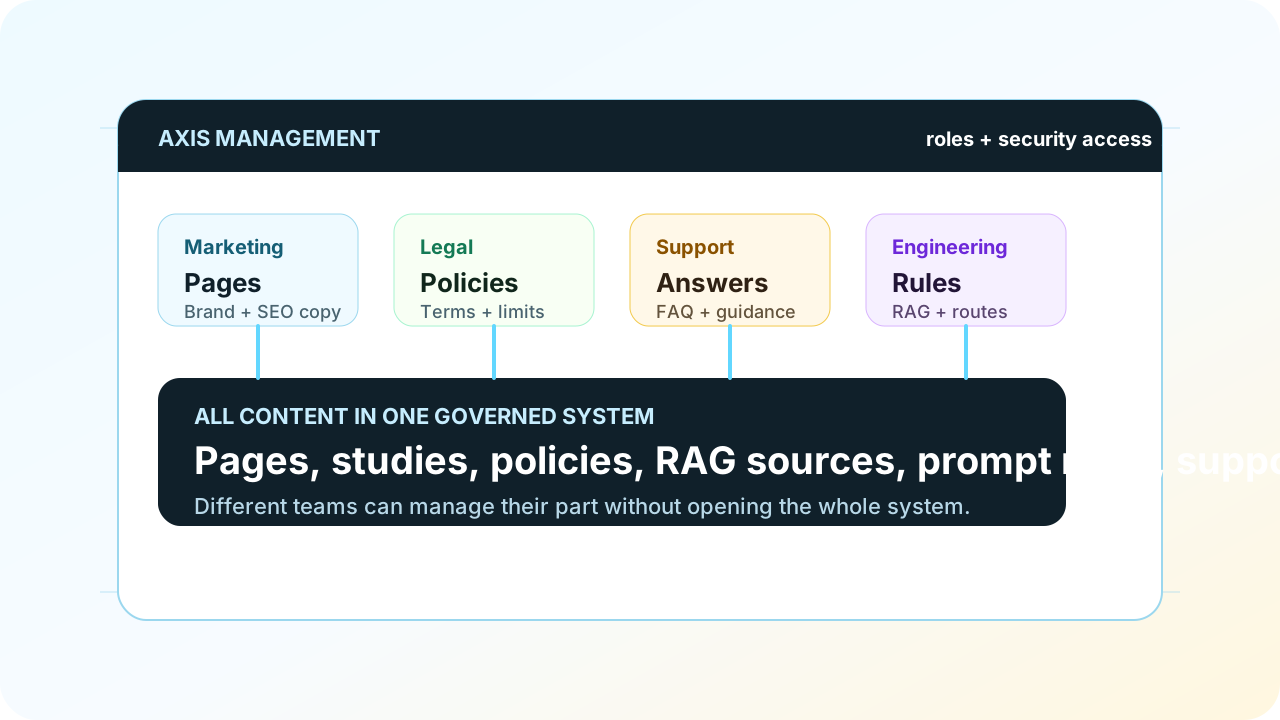
Roles

Teams manage the system through controlled access.

Marketing, legal, support, product, and engineering roles can manage the areas they own without giving everyone access to everything.

Why it matters

The human workflow matters as much as the model. The right people need safe access to the right content.

Mentis and Axis keep the AI tied to the product.
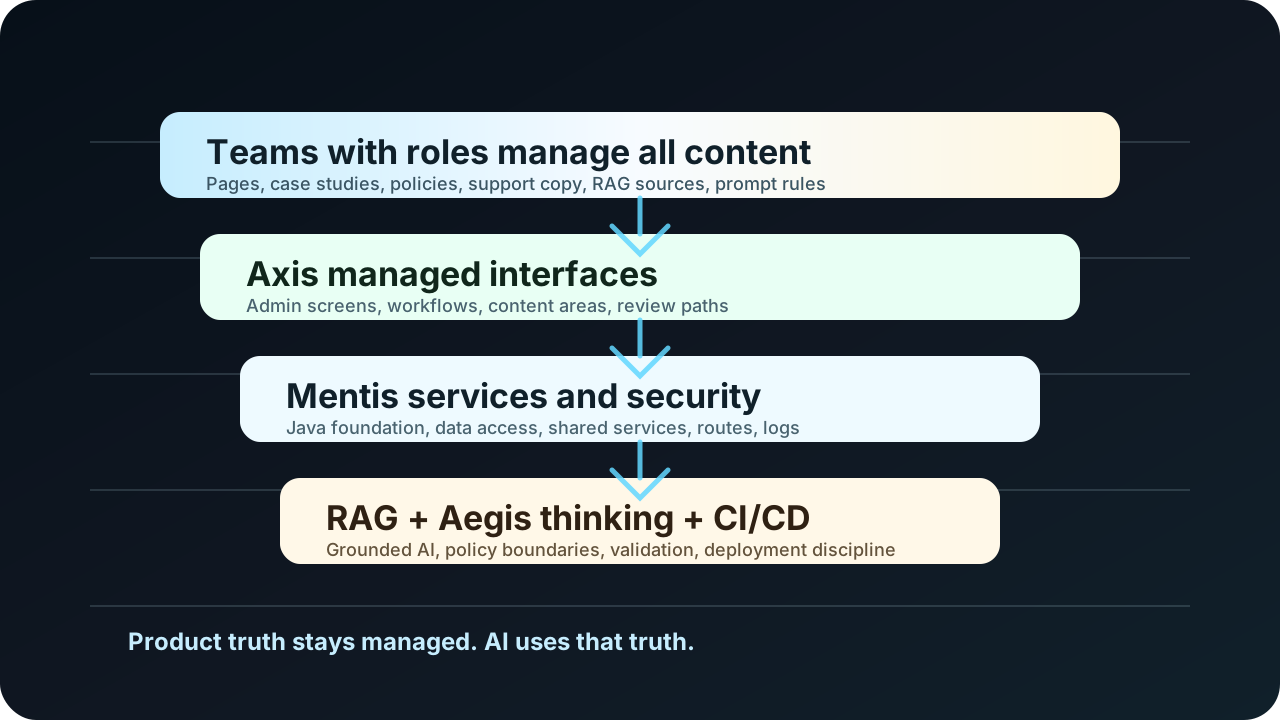
Foundation

Mentis and Axis keep the AI tied to the product.

Mentis provides services, security patterns, data access, and shared product structure. Axis provides managed UI patterns so the system can be operated by teams.

Why it matters

This is not a chatbot sitting beside the site. It is a product layer built into Hatchery's operating foundation.

FAQ

Common questions.

What is RAG?

RAG means retrieval-augmented generation. Instead of asking a model to answer only from its general training, the system retrieves relevant trusted content and uses that content to shape the answer.

Does RAG make AI answers automatically correct?

No. RAG improves grounding, but it still needs source quality, refresh logic, permissions, evaluation, logging, and human review for important decisions.

Why is Hatchery using its own site as a case study?

Because it is a useful proof environment. Hatchery has public content, product language, policy pages, case studies, route configuration, admin needs, and AI questions that need to stay aligned over time.

Where does Mentis fit?

Mentis provides reusable Java product foundation pieces, including shared services, data patterns, security habits, and admin-oriented infrastructure that can support governed AI workflows.

Where does Axis fit?

Axis provides managed interface patterns so teams can work inside the system instead of relying on one-off developer edits. That matters for pages, policies, case studies, RAG sources, prompt rules, and support content.

Can teams manage the content behind the AI?

Yes. The intended model is role-based content management, where different people can manage the pages, policies, support language, case studies, routes, AI rules, and retrieval sources they are responsible for.

How is this different from adding a chatbot?

A chatbot is the visible interaction. The real product work is trusted knowledge, role-based management, controlled intake, policy boundaries, retrieval, logs, evaluation, release discipline, and a way for the right people to update the system when the company changes.

Build with Hatchery

Take the product idea, complex workflow, or AI opportunity and make it real.

Clarify what to build, what to simplify, what to protect, and what must work first.

Idea UX Code AI + data Launch Operate Evolve

Start with Hatchery when

Clarify the path

Talk through the build