Case Study / Business-Wide Product Delivery

See the whole business, not just the task list.

Hatchery created RedRover to connect company direction, customers, product decisions, releases, communication, support, forecasts, secure AI, and execution in one operating picture. Tasks support the work; they do not define it.

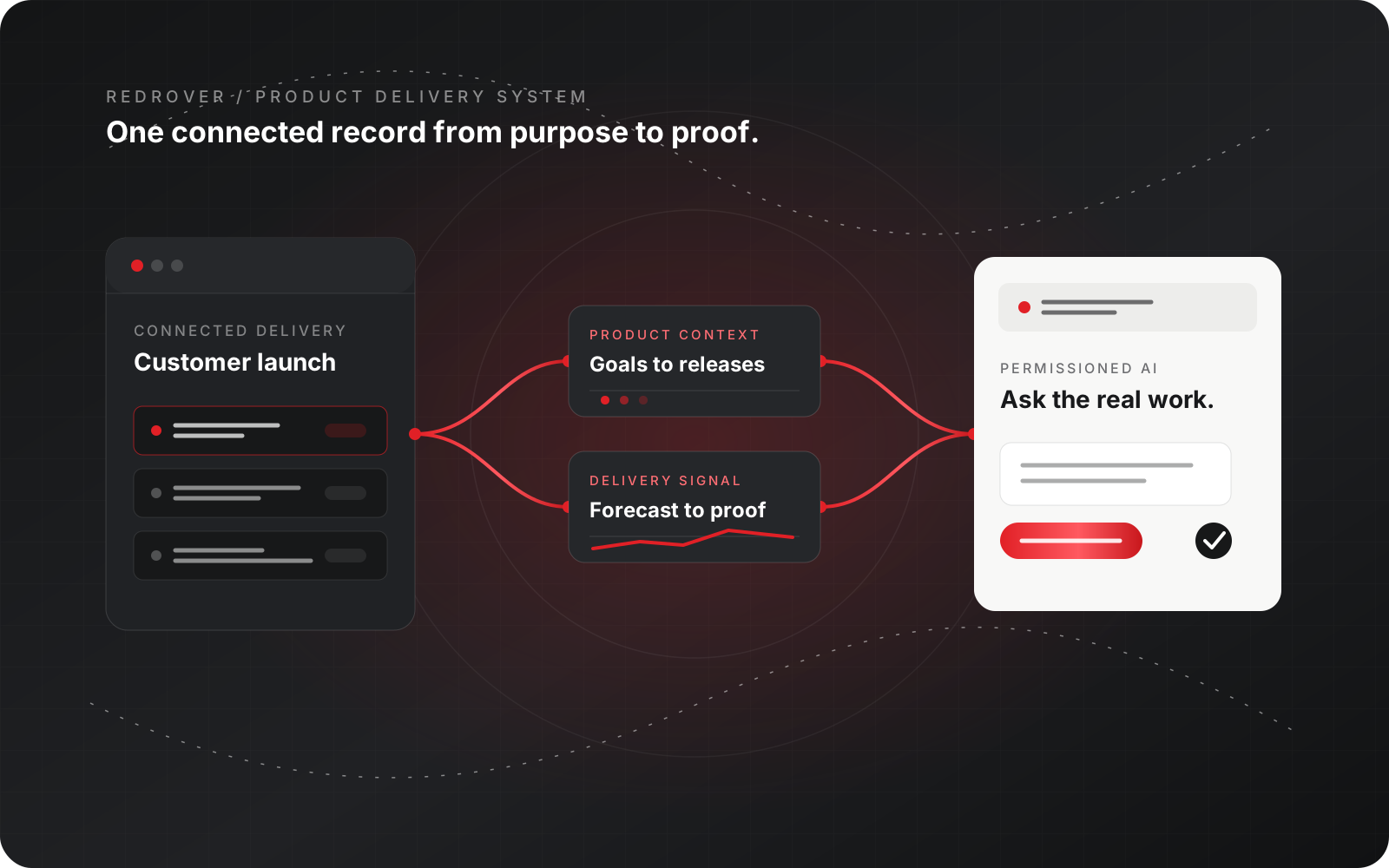
RedRover case-study illustration connecting goals, requirements, releases, delivery signals, customers, and permissioned AI.
Big picture Business through delivery Company goals, customer context, product decisions, releases, communication, support, and execution stay connected.
AI anywhere Live context beyond the app Bring current RedRover goals, releases, decisions, and communication into Claude, Codex, Grok-connected workflows, phone experiences, and other approved tools.
Desktop speed The product stays close A dedicated desktop app removes browser-tab friction and keeps the same live work, communication, and permissions immediately available.
Connected Internal and external Teams, leaders, customers, and partners communicate around the same goals, decisions, releases, and delivery record.
At a glance

RedRover

One product. No plan maze. RedRover keeps the capabilities that move a business together, so people spend less time managing tools and more time moving the work forward.

Hatchery conceived, designed, engineered, and operates RedRover as a business-wide product system rather than another task manager.
Executives, product leaders, teams, customers, and individuals can see the same connected direction and delivery story at the level appropriate to them.
Maggie and connected AI tools can work with live, permission-filtered RedRover context instead of pasted fragments.
The browser, desktop app, Java services, AWS operations, and secure data model behave as one product rather than separate versions of the truth.
Problem

Task tools show the leaves. Leaders still need the tree.

Asana and similar task-first tools are useful for assigning and tracking work. But completed tasks do not explain whether the company is pursuing the right goal, the product is solving the right problem, the customer agrees with the direction, or a release is ready to support the business.

Risk

Activity without context creates false confidence.

A full task board can look productive while strategy, customer commitments, release risk, capacity, support, and commercial reality remain disconnected. Different business levels see fragments instead of one trustworthy operating picture.

Hatchery role

RedRover starts with the business and works down to execution.

Company direction, customer context, product decisions, releases, communication, support, forecasts, and commercial commitments form the larger system. Tasks remain available where execution needs them, but they serve the strategy instead of becoming the strategy.

Comparison

Task-first tools vs. a business-wide product system

Need Task-first tools RedRover
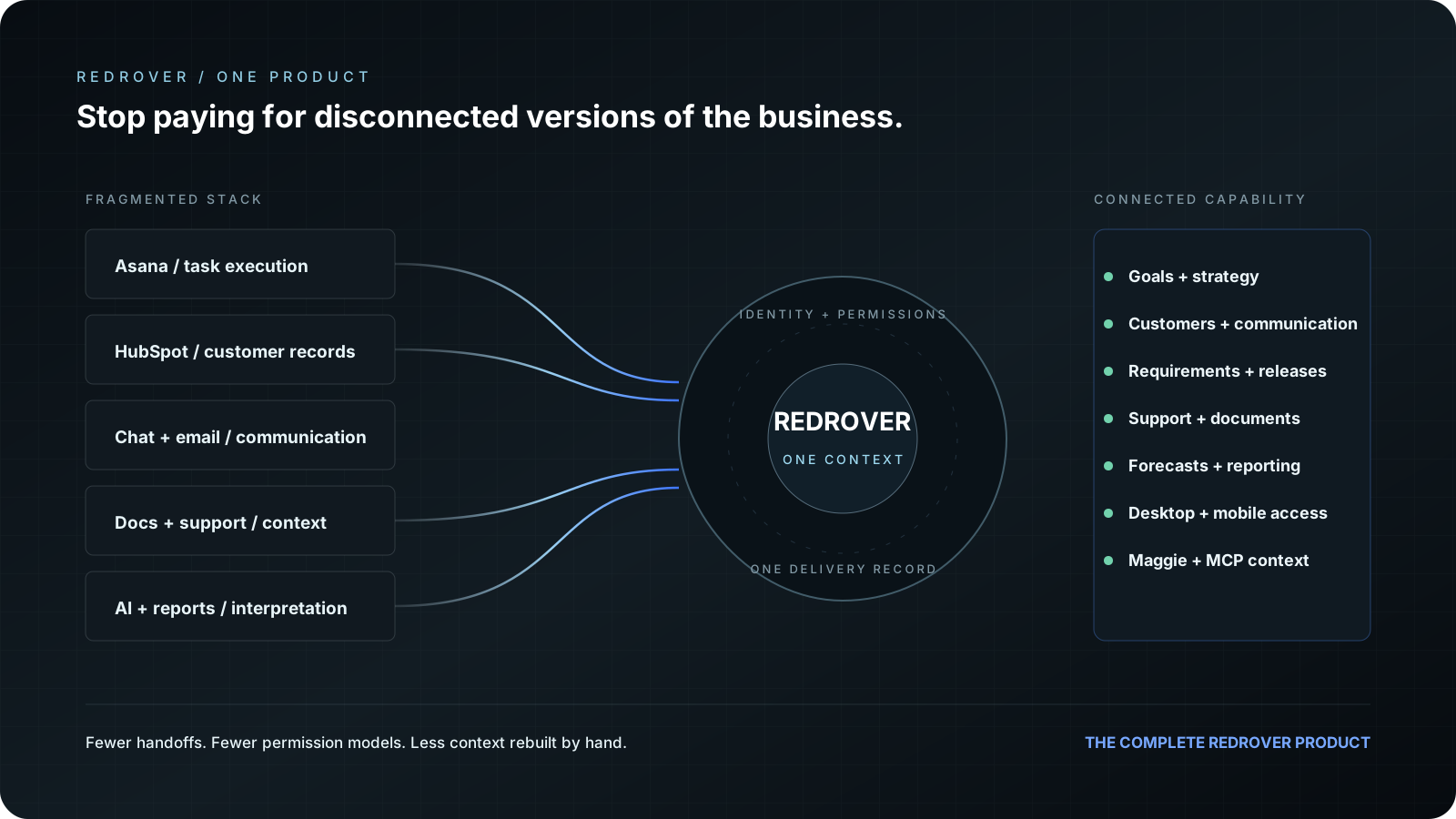
Tool stack Asana for tasks, HubSpot for customer records, plus separate chat, documents, support, reporting, and AI tools create more subscriptions, integrations, permissions, and places for context to break. RedRover keeps goals, customers, product decisions, releases, communication, support, reporting, and secure AI context in one connected product.
Feature access Large software suites often divide capability across plans, seats, hubs, add-ons, and usage tiers. Everything RedRover offers is part of one product experience, with the capabilities working together instead of being sold as disconnected modules.
Level of focus Asana and similar tools organize assignments, due dates, and completion at the leaf level. RedRover connects company direction, product decisions, customers, releases, communication, support, and execution into the larger tree.
Business visibility Executives, product teams, delivery teams, and customers often receive separate summaries assembled by hand. Each audience sees an appropriate view of the same permission-aware product and delivery record.
Product direction Goals can become background documents with weak links to daily work. Company and workspace goals remain visible beside requirements, releases, evidence, and outcomes.
Delivery Task status becomes a proxy for progress even when scope, acceptance, capacity, or customer decisions are unresolved. Observed progress, forecast assumptions, checkpoints, blockers, acceptance, and customer commitments remain distinct.
AI An assistant sees pasted fragments or receives overly broad access. MCP and Maggie use permission-filtered business and product context, explicit grants, auditable actions, and human review.
Commercial state Approval, delivery, payment, and collection are easily separated from the work or conflated with completion. RedRover keeps scope, delivery, customer decisions, immutable payment records, and collection boundaries connected but distinct.
What Hatchery built

Built as one product system.

Strategy, design, code, integrations, infrastructure, and operations move together so the product can launch and keep serving customers.

Connected business and product model

Company goals, customers, workspace goals, requirements, releases, milestones, communication, support, documents, decisions, time, and execution share a coherent structure.

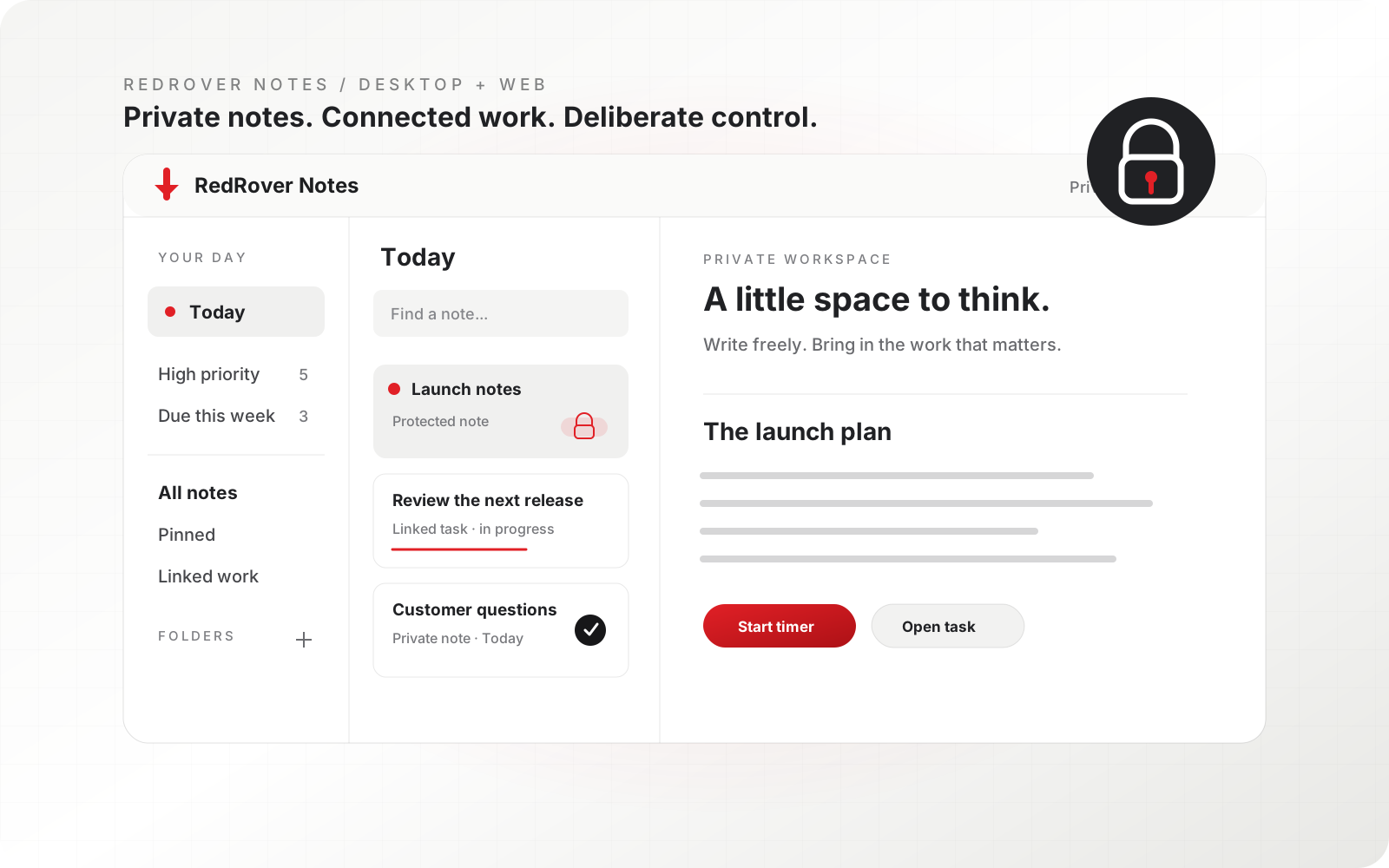
RedRover Notes: fast, private, and connected

Notes gives each person an immediate desktop and web workspace for thoughts, files, focus, and timers. Authorized RedRover goals, releases, requirements, and tasks stay live beside that private work, so speed does not come at the cost of context.

Live RedRover context in the AI tools people choose

Maggie works inside RedRover, while MCP lets approved external assistants and applications work with current goals, requirements, releases, conversations, and delivery records. Identity, workspace, and capability grants still determine exactly what each connection can see or change.

Forecasting and reporting

Etch-powered reporting, RICE analysis, capacity-aware scenarios, observed progress, and acceptance checks help teams make decisions without turning estimates into false certainty.

Commercial and customer workflows

Task orders, exact scope versions, signatures, customer views, financial permissions, and auditable payment records keep commercial state connected without confusing approval, delivery, or collection.

Secure SaaS foundation

Mentis identity, account isolation, roles, resource permissions, CSRF protection, audit history, revision checks, and server-owned authorization protect every route and mutation.

Web reach and desktop speed

RedRover opens anywhere in the browser, while its Electron app keeps frequent planning, communication, Notes, and delivery work one action away. Both experiences use the same live Java services, permissions, and records.

Real-time-ready architecture

Notifications and changes are durable and server-authoritative. Responsive channels, including WebSockets where they add value, can accelerate the interface without becoming the source of business truth.

Decisions

Product choices that made the work hold together.

01

Start above the task list

RedRover begins with business purpose, customer context, product decisions, and releases. Tasks are useful execution records only when the larger reason and expected outcome remain visible.

02

Make security part of the domain model

Navigation is never the security boundary. Account, workspace, role, financial, file, AI, and customer visibility are enforced again inside Java services.

03

Separate facts from forecasts

Recorded work, estimates, capacity assumptions, approvals, delivery, and payments remain distinct so the interface does not overstate certainty.

04

Let AI work through the product

MCP and Maggie operate through the same permissions, records, and review paths as people. AI can propose or perform supported actions, but it does not silently approve scope, send messages, sign documents, or collect money.

05

Design extension points without pretending they are shipped

The payment and real-time boundaries can support RanchPayments and WebSocket-driven experiences, while the current product remains honest about what is active today.

RedRover today

RedRover gives individuals and companies a connected view of direction, product strategy, internal and customer communication, delivery, support, secure AI, and commercial work. RedRover Notes adds a fast private workspace beside that shared context. Together they remain close through the browser, desktop, phone, and the AI tools people already use.

What this demonstrates

RedRover demonstrates Hatchery's ability to turn a broad product idea into a calm, connected system where business direction, communication, mathematical prioritization, secure data, AI access, desktop software, and long-term operation work together.

RedRover is the kind of product Hatchery is built to create: thoughtful UX on the surface, serious domain logic underneath, and a clear path from business purpose to software people can actually operate.
Hatchery Product engineering team
Product evidence

The interface stays calm while the product model runs deep.

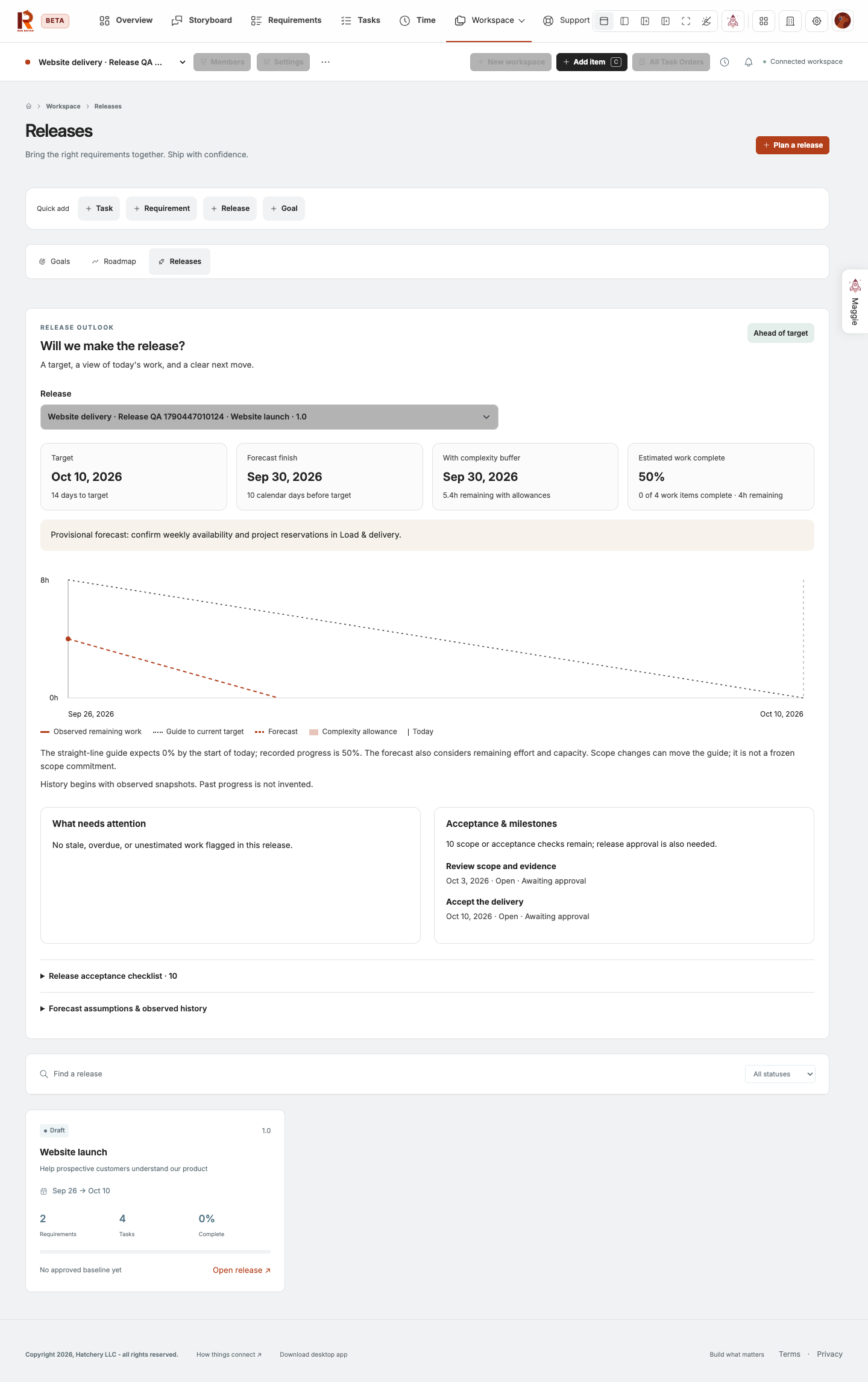
These screens show how RedRover keeps company direction, product decisions, delivery forecasts, communication, and live AI context connected without collapsing everything into a task board.

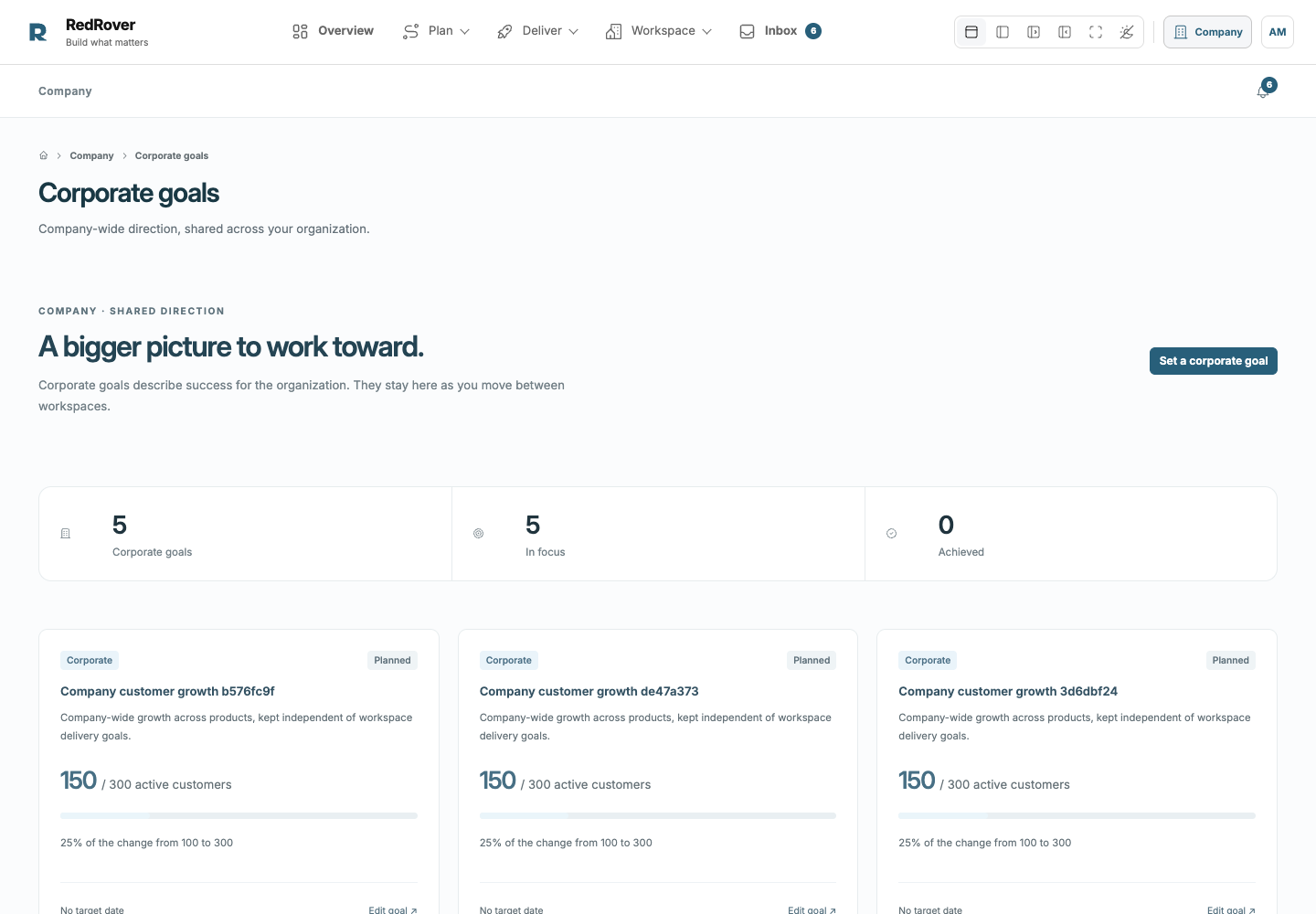
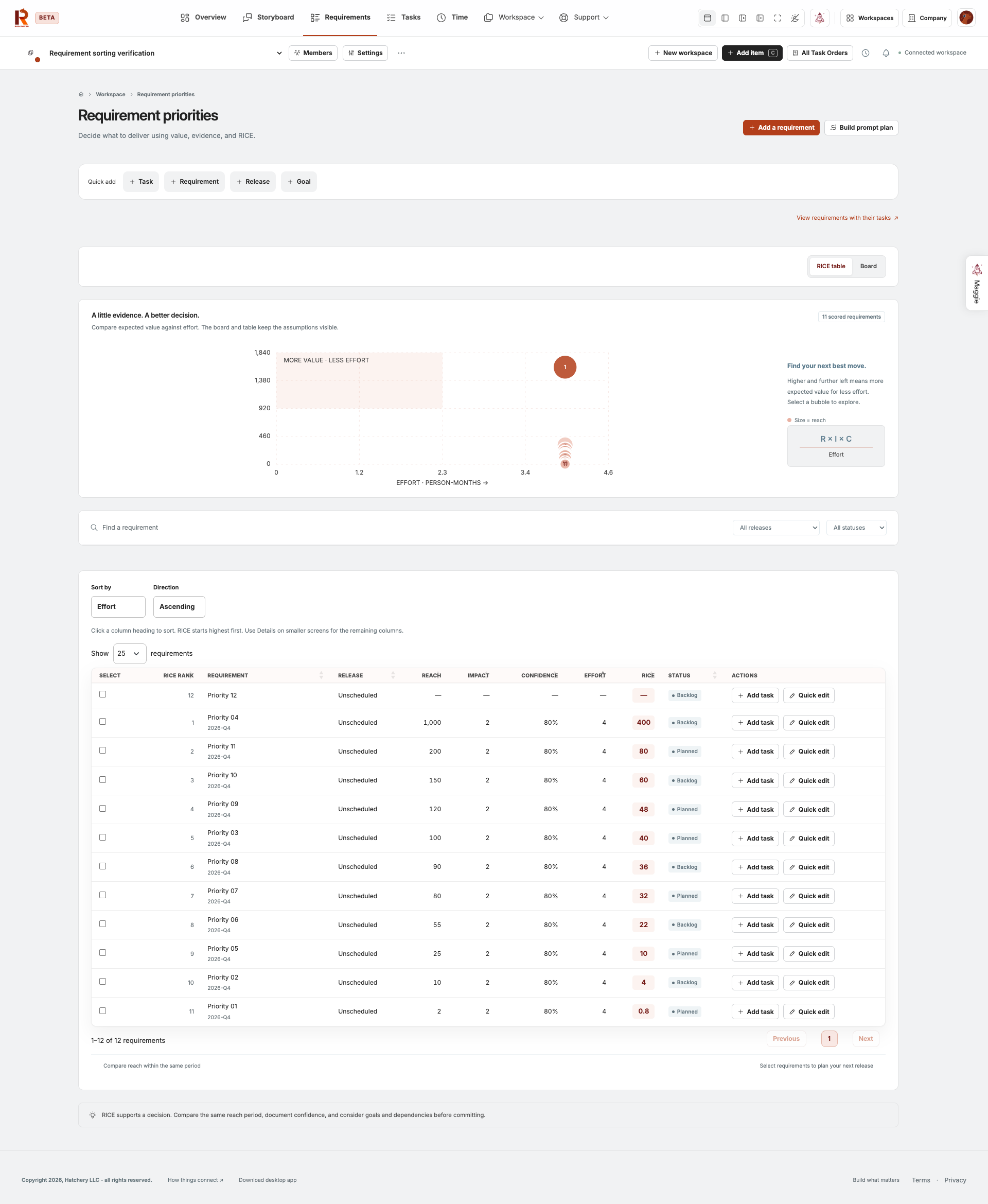
Company goals remain visible across workspaces Communication stays attached to decisions and delivery Forecasts distinguish observed work from assumptions Approved AI tools can work with live RedRover context
Replace the fragmented stack with one operating picture.
One product

Replace the fragmented stack with one operating picture.

Tasks, customer context, communication, documents, support, reporting, and AI lose value when every system carries a different version of the business.

Keep the larger outcome in view.
Company direction

Keep the larger outcome in view.

Corporate goals give the organization a shared direction that remains visible while teams move between workspaces and releases.

Prioritize with evidence and tradeoffs.
Product decisions

Prioritize with evidence and tradeoffs.

Requirement views compare reach, impact, confidence, effort, status, and release context while preserving the assumptions behind the score.

See whether the release can hold up.
Release intelligence

See whether the release can hold up.

Observed progress, remaining effort, capacity assumptions, target dates, milestones, and acceptance checks form a clearer release outlook.

Take RedRover context into the AI tool you choose.
MCP and AI

Take RedRover context into the AI tool you choose.

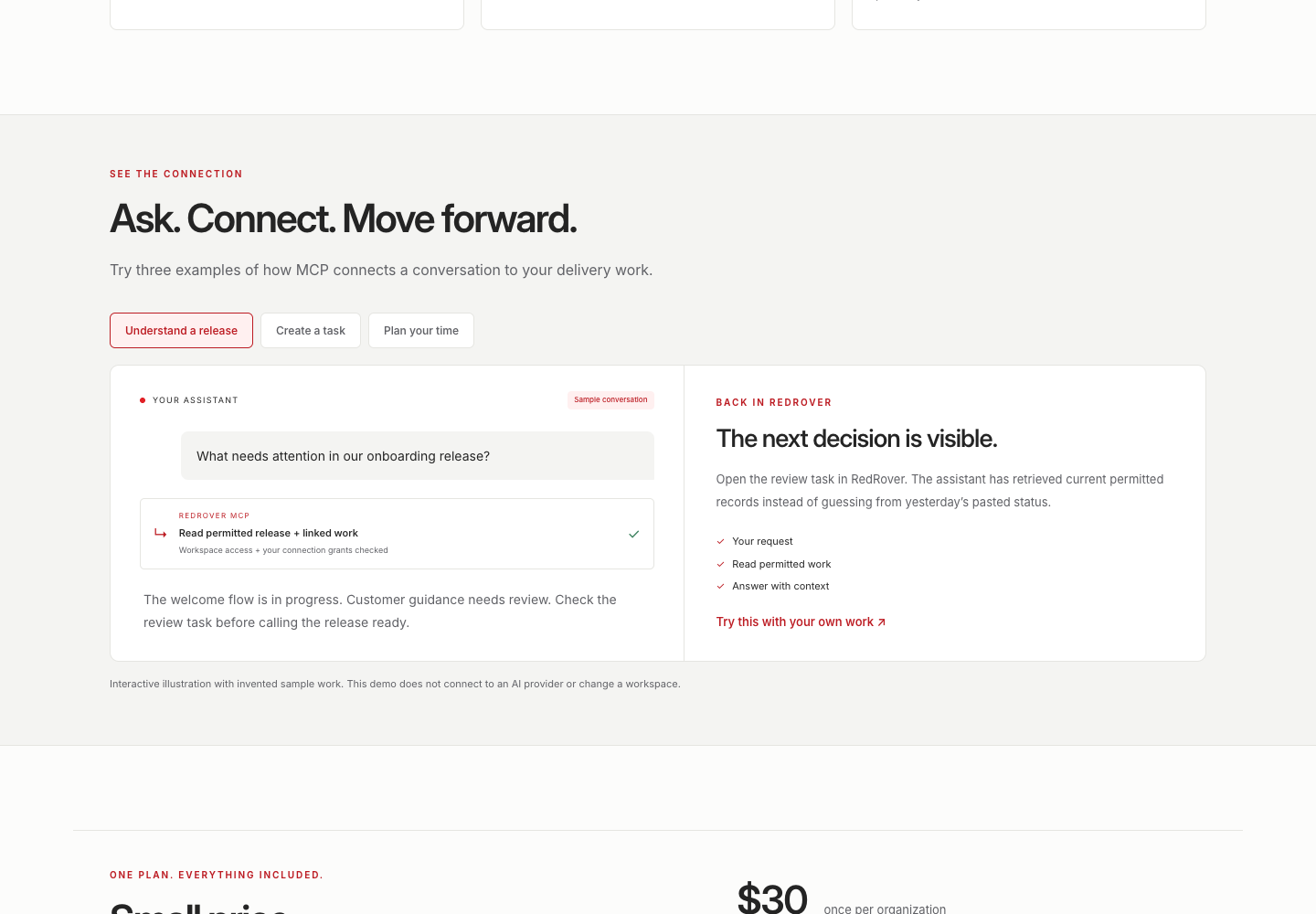
Claude, Codex, Grok-connected workflows, phone experiences, and other approved agents or applications can work with current RedRover goals, requirements, releases, and communication instead of relying on copied fragments.

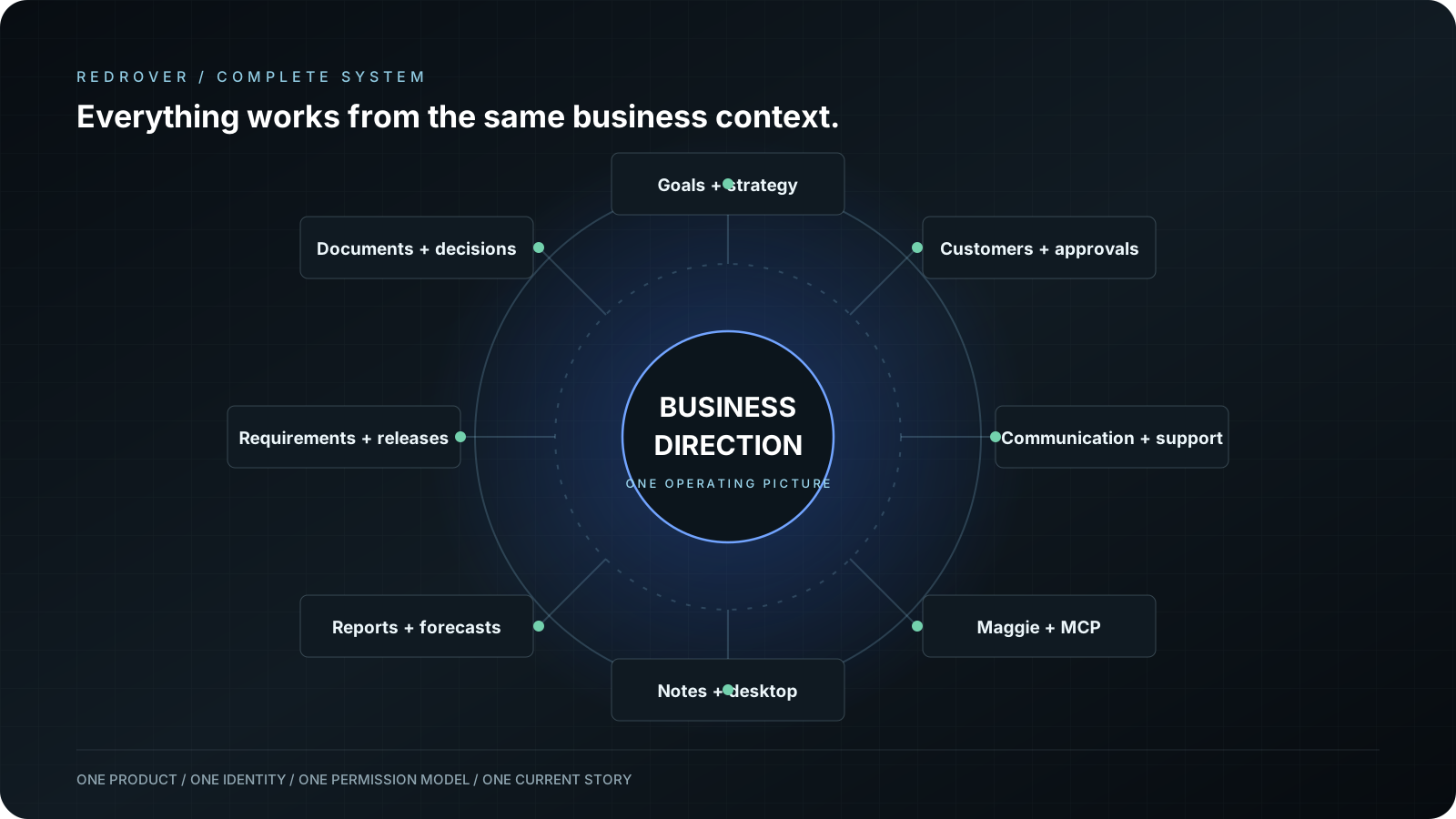
Everything works from the same business context.
Complete system

Everything works from the same business context.

Goals, customers, requirements, releases, communication, support, reports, desktop access, and AI are not isolated modules. They are connected views of the same work.

1 / 6
FAQ

Common questions.

What is RedRover?

RedRover is a business-wide product delivery and communication platform that connects goals, customers, requirements, releases, conversations, support, forecasts, approvals, execution, commercial work, and secure AI context.

How is RedRover different from Asana and other task tools?

Asana and similar tools primarily organize tasks and assignments. RedRover starts with the larger business picture: company goals, product decisions, customers, releases, communication, support, forecasts, and commercial context. Tasks are one execution layer inside that system, not its center.

How does RedRover use AI?

Maggie helps inside RedRover. MCP can bring live RedRover context into Claude, Codex, Grok-connected workflows, phone experiences, and other approved agents or applications. Each connection remains limited by the person's identity, authorized workspaces, and explicit read or action capabilities.

Does RedRover support payments?

RedRover records auditable payments received elsewhere and keeps them separate from scope approval and delivery completion. Direct card collection and subscriptions are a separate RanchPayments integration phase and are not presented as active in the current release.

Why does RedRover have a desktop app?

Important work should not disappear in a browser tab. The Electron app keeps planning, communication, Notes, and delivery context immediately available in a focused desktop experience, while using the same live Java services, permissions, and records as the web product.

Does RedRover use WebSockets?

RedRover currently keeps important state changes durable and server-authoritative. Its architecture can add WebSocket-driven responsiveness where that improves collaboration without moving authorization or business truth into the client.

What does this case study say about Hatchery?

It shows Hatchery's ability to turn an original product idea into a secure, connected system spanning strategy, communication, UX, Java architecture, data, AI, customer workflows, desktop software, AWS operations, testing, and continued product delivery.

RedRover Beta

Run the business from one connected product.

Request early access to the complete RedRover experience: goals, customers, product decisions, releases, communication, support, reporting, desktop access, Notes, and secure AI context.